The Agentic Workflow: When AI Takes Action
 Lorenzo Vallone
Introduction
For the first few years of the Generative AI era, our relationship with models was passive. We asked a chatbot a question, and it gave us an answer. It was a librarian—knowledgeable, but stuck behind a desk.
In 2026, the AI has left the desk. We have entered the era of the Agentic Workflow.
An "Agent" differs from a "Chatbot" in one fundamental way: Agency. A chatbot writes text; an agent executes actions. Agents can browse the live web, write and execute code, save files to your hard drive, and interact with other agents to solve problems without human intervention. The shift is from Generative AI (creating content) to Agentic AI (completing tasks).
The market has coalesced around three major frameworks, each representing a different philosophy of how digital workers should be managed: LangGraph, CrewAI, and Microsoft AutoGen.
The Enterprise Standard: LangGraph
If you are building a mission-critical banking app or a medical diagnosis tool, you cannot afford for your AI to "get creative" with its process. You need Determinism.
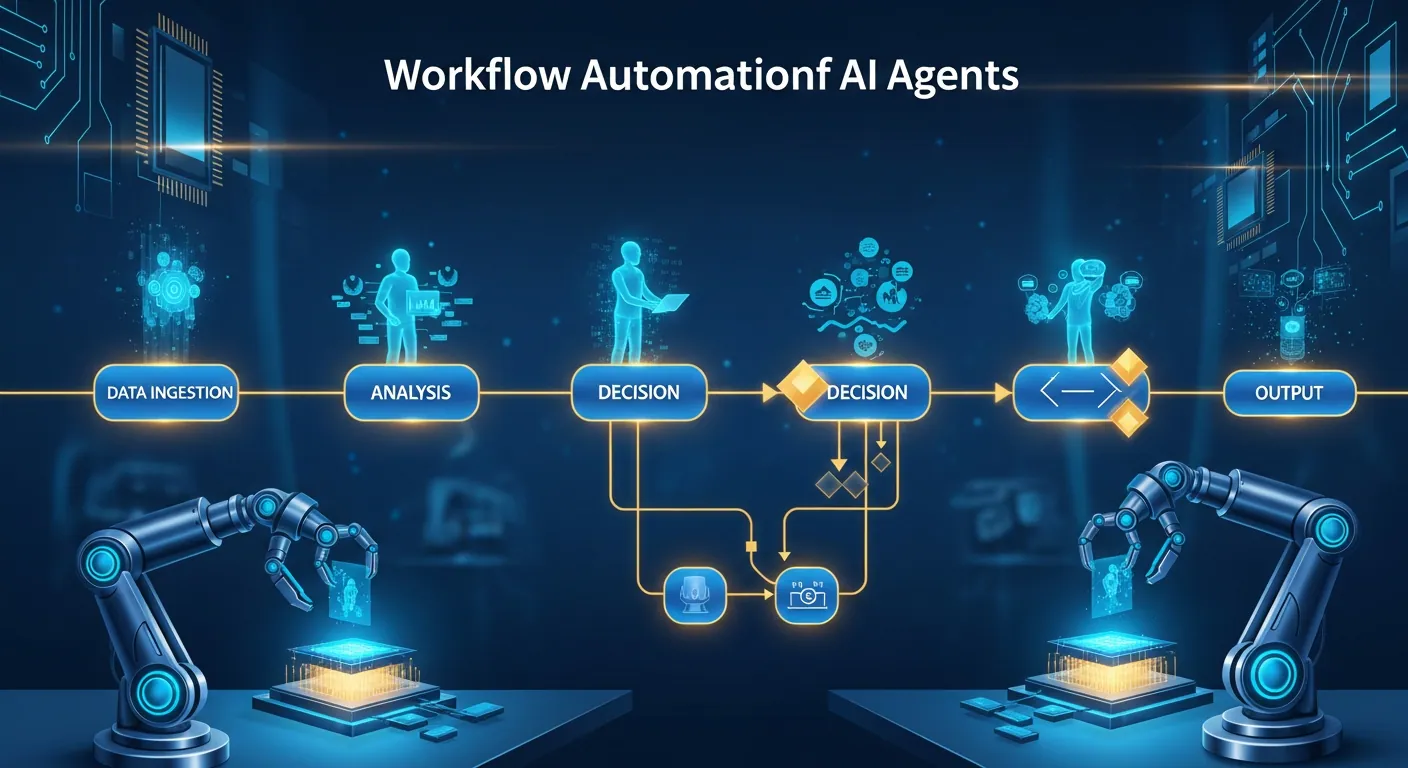
LangGraph (an evolution of LangChain) is the industry standard for these high-stakes environments. It treats agent workflows as a "Graph"—a rigid flowchart of states and edges. You define exactly what happens next: If the user asks for a refund -> Check Database -> If eligible -> Process Refund -> If not -> Escalate to Human.
In 2026, LangGraph is the "Infrastructure" choice. It is less about magic and more about control. It allows engineers to build "Human-in-the-loop" breakpoints where the agent must pause and ask for permission before executing a sensitive action, like transferring funds or deploying code.
The Manager's Choice: CrewAI
If LangGraph is for engineers, CrewAI is for managers.
CrewAI treats AI agents like employees. You don't write complex graph code; you write job descriptions. You define a "Researcher," a "Writer," and a "Manager." You give them a goal—"Research the top 5 solar panel trends in 2026 and write a blog post"—and then you step back.
The "Manager" agent in CrewAI autonomously delegates tasks. If the Writer produces a bad draft, the Manager critiques it and sends it back for revision without you ever knowing. This Role-Playing Architecture has made CrewAI the dominant framework for marketing, content creation, and business automation teams who want results without touching Python code.
The Research Lab: Microsoft AutoGen
Microsoft AutoGen takes a different approach: Conversational Swarms.
In AutoGen, agents solve problems by "talking" to each other in a chat room. You might spawn a "Coder" agent and a "User Proxy" agent. The User Proxy says, "Build me a snake game." The Coder writes the code. The User Proxy runs it, sees an error, and pastes the error back into the chat. The Coder apologizes and fixes the bug.
This loop continues until the code works. AutoGen is powerful because it mimics how human engineering teams solve novel problems—through dialogue and trial-and-error. However, it can be unpredictable. Sometimes the agents get stuck in a loop of politeness, complimenting each other instead of working. For this reason, it remains the favorite of R&D labs rather than production pipelines.
Conclusion
The "Agentic" shift changes the economy of work. We are moving from Prompt Engineering (learning how to talk to a bot) to Flow Engineering (designing the systems where bots talk to each other).
Related Resources
Explore the tools mentioned in this article:
- LangGraph - Graph-based agent workflow framework
- CrewAI - Role-based multi-agent orchestration
- Microsoft AutoGen - Conversational agent framework
- Devin AI - Autonomous software engineer agent