From HTML 1.0 to Gemini: My 30-Year Journey Coding with AI at Google's OpenClaw Meetup
 Lorenzo Vallone
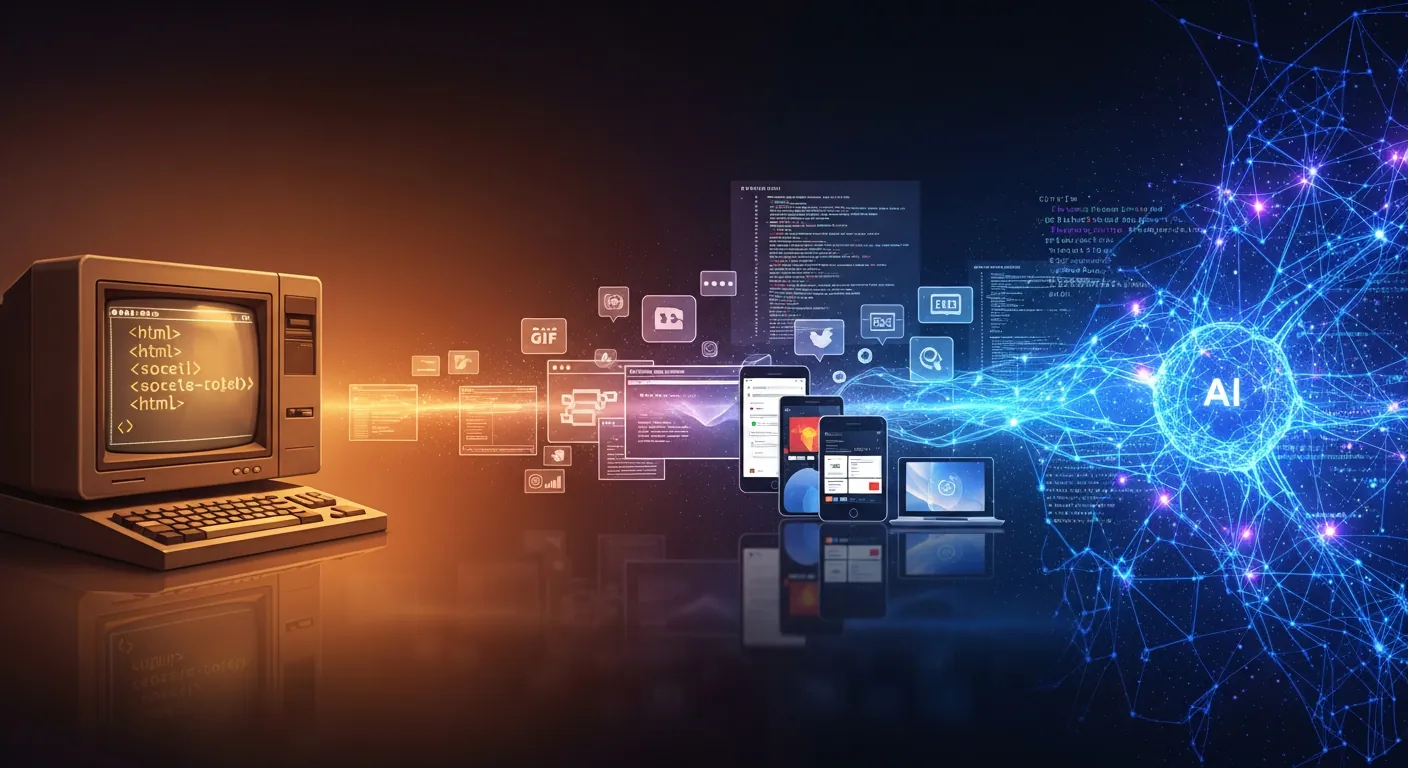
It was a crisp, clear morning in Mountain View, California, the kind that feels charged with possibility. As I walked through the iconic Googleplex, past the brightly colored bikes and the whimsical Android statues, a profound sense of history, and indeed, destiny, settled upon me. I was there for the Google Gemini OpenClaw meetup, an event focused on the bleeding edge of AI, specifically Google's formidable Gemini models. For Lorenzo Vallone, founder of ARTE LOGICA and someone who's had his hands in the digital clay for nearly three decades, this wasn't just another tech conference; it was a pilgrimage.
My journey in technology began in 1994, a year that feels both like yesterday and a lifetime ago. Back then, the internet was a nascent wilderness, and I was among the early explorers, armed with a printed copy of HTML 1.0 documentation. I remember poring over those pages, meticulously hand-typing angle brackets and attributes into a text editor, then holding my breath as I uploaded a simple .html file to a server. The thrill of seeing my words and images materialize on a browser screen, accessible to anyone with a dial-up connection, was intoxicating. It was a miracle of connection, a testament to human ingenuity.
Now, in 2026, I stand on the precipice of another, even more astonishing revolution. I code not just for machines, but increasingly with them. The journey from those crude HTML tags to today's sophisticated large language models like Gemini is nothing short of surreal. It's an evolution that has reshaped industries, redefined what's possible, and fundamentally altered the very fabric of how we create.
The Arc of Innovation: From Printed Pages to Intelligent Partners
The Genesis: HTML 1.0 and the Dawn of the Web
In 1994, the internet was a wild west. Information was scarce, and creating a website felt like conjuring magic. My first website was a testament to patience and a thirst for understanding. There were no integrated development environments, no Stack Overflow, no AI assistants to offer suggestions. It was raw, unadulterated problem-solving. Every <a> tag, every <img> element, was a deliberate act of construction. The web was a series of interconnected documents, and the wonder lay in the sheer fact that these documents could be shared globally, instantaneously (or as instantaneously as a 28.8k modem allowed). This era instilled in me a deep appreciation for the foundational layers of technology, the building blocks that would underpin everything that came next. It was about understanding the machine at a granular level, about speaking its language.
The Web's Maturation: Complexity and Collaboration
The late 90s and 2000s saw an explosive growth. Dynamic content took over with server-side scripting languages like PHP, ASP, and eventually, Python and Ruby. JavaScript evolved from a simple client-side scripting tool to the powerhouse behind entire application frameworks like Angular, React, and Vue. CSS transformed design from rudimentary layouts to intricate, responsive experiences. Databases became the backbone of nearly every application, and the cloud began its ascent, abstracting away the hardware concerns that once plagued developers.
As the web grew, so did the complexity. Projects became larger, teams grew, and the art of development shifted from lone artisans to orchestrated symphony orchestras. I adapted, as all good developers must. I learned new languages, embraced new paradigms, and saw ARTE LOGICA evolve from a nascent idea into a thriving software development and insights company. The tools improved dramatically, but the fundamental challenge remained: translating human ideas into machine-executable instructions. We built sophisticated systems, but the cognitive load on developers was immense. Debugging complex systems, integrating disparate APIs, and maintaining vast codebases required immense human effort and intellectual horsepower.
The AI Inflection Point: Coding in 2026
Fast forward to 2026, and the landscape has changed utterly. The advent of large language models (LLMs) like Google's Gemini marks an inflection point as significant as the invention of the graphical user interface or the internet itself. Today, my workflow at ARTE LOGICA is dramatically different. Instead of spending hours writing boilerplate code, I articulate my intent to Gemini. It generates robust, contextually aware code snippets, defines data structures, and even suggests architectural patterns. It's like having a hyper-intelligent, infinitely patient pair programmer at my side.
Debugging, a notoriously time-consuming and often frustrating aspect of development, is now a collaborative effort. I feed Gemini error logs, and it often pinpoints the issue with startling accuracy, suggesting solutions or guiding me toward the problematic section of the codebase. It's not just about speed; it's about reducing cognitive friction, allowing me to focus on the higher-level design, the architectural decisions, and the creative problem-solving that truly differentiates human developers. This isn't just an evolution of tools; it's a fundamental paradigm shift in how we interact with technology.
A Day at the Googleplex: Immersed in the Future
Walking through the Google campus, there's an undeniable buzz in the air. The bright, open spaces, the impromptu collaborations happening in cafes, the palpable sense of relentless innovation — it's infectious. The iconic Google bikes are everywhere, a symbol of freedom and accessibility. To be at the heart of where so much of our digital world is conceived and brought to life is an experience that resonates deeply with my nearly 30 years in this industry. It feels like reaching a summit I've been climbing my entire professional life.
The Gemini OpenClaw meetup itself was an immersion into the future. The "OpenClaw" moniker, I mused, suggested not only the powerful grasp of Gemini's capabilities but also an openness to collaboration and expansion. The room was packed with a diverse group: researchers, engineers, startup founders, and fellow tech journalists. The energy was electric, a shared excitement for what these foundational models could achieve.
We saw presentations detailing Gemini's multimodal capabilities — its ability to seamlessly process and generate text, images, audio, and video. Use cases ranged from sophisticated code generation and refactoring to complex scientific problem-solving, creative content generation, and even real-time robotic control. One demonstration showcased Gemini reasoning through a logical puzzle presented visually, then explaining its thought process in natural language, and finally writing Python code to solve a similar problem. This was not just a fancy autocomplete; it was a profound demonstration of understanding and inference.
The discussions during breaks were equally illuminating. Developers shared their own experiences integrating Gemini into their workflows, highlighting productivity gains and entirely new product possibilities. There was a consensus: Gemini wasn't just a tool; it was a catalyst, empowering developers to build things that were previously too complex or time-consuming. I felt a renewed sense of purpose, a confirmation that my lifelong passion for creation in the digital realm was still at the vanguard of human endeavor.
Coding in 2026: A Symbiotic Relationship
At ARTE LOGICA, we've fully embraced this symbiotic relationship with AI. Gemini isn't just a novelty; it's integrated into every stage of our software development lifecycle. For instance, when starting a new project, instead of manually setting up the initial file structure, configuration files, and basic API endpoints, I describe the project's intent and technologies to Gemini. Within moments, I have a well-structured boilerplate, saving hours of repetitive work.
When facing a particularly tricky bug or needing to understand a legacy codebase, Gemini acts as a remarkably effective interpreter. I can feed it code segments, ask for explanations of complex algorithms, or even request refactoring suggestions to improve readability and performance. It's like having a vast library of programming knowledge and an expert mentor available on demand.
This doesn't diminish the role of the human developer; it elevates it. Instead of being bogged down by syntax and boilerplate, we can spend more time on architectural design, user experience, novel feature development, and complex problem-solving. Our creativity is amplified, our reach extended. The quality of our output improves, and our development cycles shorten. We're not just faster; we're smarter, more innovative.
The concept of "human-in-the-loop AI" is central to this. Gemini proposes solutions, but the final decision, the nuanced judgment, the ethical considerations, and the creative spark ultimately remain with me. It's a partnership, where each brings their unique strengths to the table. I provide the vision, the context, and the oversight; Gemini provides the raw processing power, the pattern recognition, and the rapid generation of possibilities.
The Road Ahead: AI, Creativity, and the Human Spirit
As I left the Googleplex, the Mountain View sun setting behind the iconic buildings, I couldn't help but feel a profound sense of optimism for the future. We are entering an era where AI is democratizing development, lowering the barrier to entry for countless aspiring creators. Imagine a world where anyone with an idea can articulate it to an AI and see a functional prototype emerge in minutes. This empowers a new generation of innovators, much like the early web empowered hobbyists to publish their thoughts to the world.
But AI's potential extends far beyond coding. It will be instrumental in solving some of humanity's grandest challenges — from accelerating scientific discovery and medical breakthroughs to addressing climate change and fostering global communication. The ethical considerations are, of course, paramount, and require continuous, thoughtful engagement from technologists, policymakers, and society at large. We must guide this powerful technology responsibly, ensuring it serves humanity's best interests.
What remains constant, however, is the enduring value of human ingenuity, intuition, and empathy. AI can process vast amounts of data and generate countless permutations, but it is human creativity that asks the fundamental "why," that envisions truly novel solutions, that brings emotional intelligence and moral compass to the equation. AI is a magnificent instrument, but humanity remains the conductor, the composer, the artist.
My 30-year journey from typing HTML 1.0 from a printed book to collaborating seamlessly with a sophisticated AI like Gemini has been a testament to relentless innovation. It has been a constant cycle of learning, adapting, and embracing change. And as I reflect on this personal milestone, I am filled with an exhilarating sense of what lies ahead. The journey continues, and it is more exciting, more profound, and more pregnant with possibility than I could have ever imagined. The future isn't just bright; it's intelligently illuminated, and we, as creators, are poised to paint masterpieces upon its canvas.