Legal Tech – The End of the Billable Hour for "Review"
 Lorenzo Vallone
Introduction: The Drudgery of "Redlining"
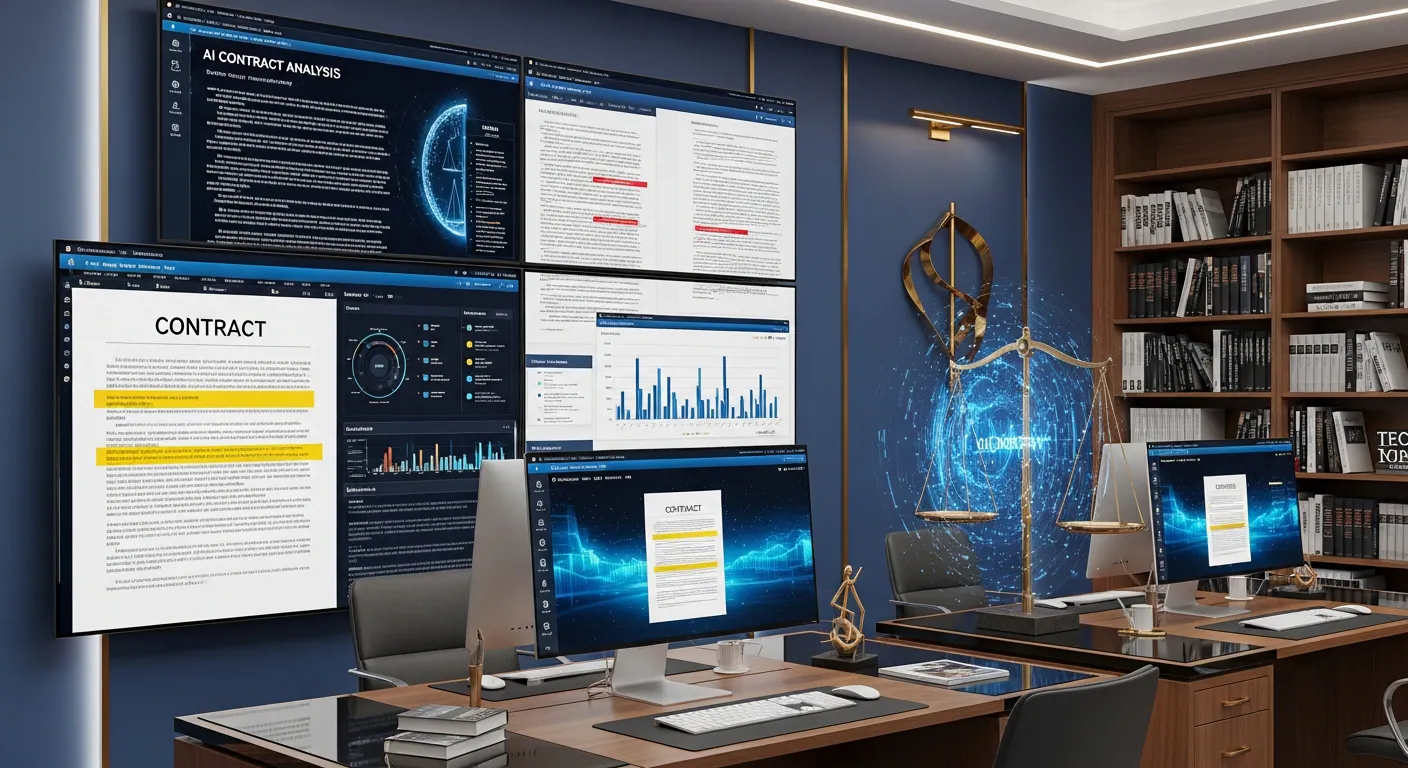
Law firms spend 40-60% of their time on "Redlining"—reading standard contracts (NDAs, MSAs) and marking up risks. This is low-value, high-boredom work. AI agents can now read, understand, and negotiate these contracts autonomously, forcing a shift from "Billing for Time" to "Billing for Judgment."
The Business Case: Velocity and Risk
For in-house counsel, the value is speed: reducing contract turnaround from 10 days to 2 days accelerates revenue recognition. For firms, it creates margin protection by automating flat-fee work.
Specific AI Solutions
1. Automated Redlining
The Problem: Reviewing standard agreements is repetitive.
The AI Solution: Spellbook (integrated into MS Word) scans a contract and instantly flags clauses that violate the company playbook (e.g., uncapped liability). It suggests specific redline text to fix it, reducing review time by 90%.
2. Contract Lifecycle Management (CLM) Intelligence
The Problem: "What is our exposure?" is a hard question to answer across 5,000 PDFs.
The AI Solution: Ironclad and Lexion use OCR and NLP to turn contracts into structured data. A GC can ask, "Show me all contracts expiring in Q3 with a CPI adjustment clause," and get an instant dashboard.
3. Due Diligence Speed
The Problem: M&A reviews are limited by human reading speed.
The AI Solution: Kira Systems ingests entire data rooms during M&A, extracting key risks (lawsuits, IP issues) across thousands of documents in hours, allowing for 100% coverage rather than random sampling.
Conclusion
AI is not replacing lawyers—it's replacing the tedious work that lawyers hate. The firms that embrace this shift will win on velocity and margin.
Related Resources
Explore the AI tools featured in this article:
- Spellbook - AI contract review integrated with MS Word
- Ironclad - Contract lifecycle management with AI
- Lexion - AI-powered contract intelligence
- Kira Systems - M&A due diligence automation