I Bought Ray-Ban Meta Gen 2 Glasses to Build a Better Way to Cook
 Lorenzo Vallone

I might be a little late to the party. Millions of AI glasses have already been sold, and I only recently bought my Ray-Ban Meta (Gen 2) pair. I wanted the obvious things: phone calls without earbuds, music that does not shut out the room, hands-free photos and video, and the ability to ask Meta AI about something in front of me. But I bought them for another reason, too. I want to build for the world around us, not just the screen in our hands.
For years, we've designed digital life around a small rectangle we have to hold, tap, and look down at. Information about what we're seeing and doing is often just out of reach. We lose a hand to the phone, shift our attention away from the person or task in front of us, and interrupt the flow of ordinary life. Sometimes the most important interface improvement isn't a bigger screen. It's the freedom to look up.
That is what excites me about AI glasses. And my first app idea begins somewhere very ordinary: in the kitchen.
Why Gen 2, and Why Now?
I'm writing this during Meta Connect 2026. The timing is funny: on September 23, Meta announced Ray-Ban Meta (Gen 3), along with camera-free Ray-Ban Meta Audio glasses and an expanded wearables lineup. I have just bought Gen 2. So yes, my new glasses are no longer the newest pair.
But that's also the point. The question for me isn't whether I have the latest frame. It's what becomes possible when useful computing moves into a device people might actually wear every day. Gen 2 is already capable enough to explore that question.
The Ray-Ban Meta (Gen 2) combines open-ear speakers, microphones, a camera, voice control, and Meta AI in recognizable eyewear. I can take calls, listen to music, capture a moment from my own point of view, and ask for help without first fishing my phone out of my pocket. Meta says the glasses support 3K video and up to eight hours of typical use on a charge, with an additional 48 hours of charging from the case. Actual battery life will depend on what I'm doing.
Meta AI can answer questions about what the camera sees, and supported translation features can help with conversations across languages. The glasses can capture photos and videos for sharing; sharing workflows and available features depend on the app, region, and software version. They are not the Meta Ray-Ban Display: my Gen 2 pair has no in-lens screen. That limitation makes voice and audio interaction especially important.
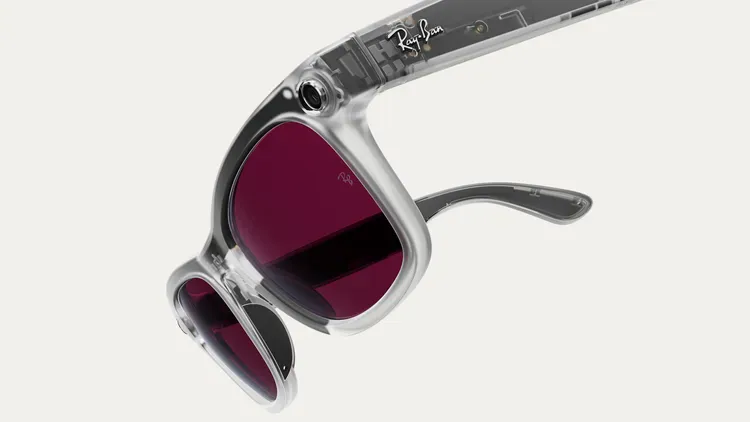
Ray-Ban Meta (Gen 2) product image: Meta.
The Problem I Want to Solve Is Dinner
I love cooking, almost as much as I love eating. But following a recipe on my phone is an awkward little ritual: unlock it with messy hands, scroll past the ingredient list, check a measurement, set it down, pick it up again, wonder which step I was on. Then comes the grocery store: switching between a recipe, a shopping list, and whatever I can remember I already have at home.
I'd like to make that flow more natural. Imagine asking, "What do I need for dinner tonight?" and hearing a concise shopping list. At the store, I could ask what's still missing. At the counter, I could get the next step rather than listening to an entire recipe at once. If I'm looking at an ingredient, camera input could help me ask a contextual question—while the app stays honest about what it can and cannot identify.
The goal is not to put a miniature cookbook in my face. These glasses don't have a display. The goal is to let me keep my attention on the ingredients, the pan, the people I'm cooking for, and the space around me.
That is the first app I'm working toward. It's an idea under development, not an app I am claiming to have released. Recipes, shopping data, cooking timers, permissions, and an AI assistant have to work together reliably before the experience deserves a place in someone's kitchen.
What Developers Can Actually Build
It matters to separate the vision from the current platform. Meta's Wearables Device Access Toolkit gives developers a way to bring glasses-based camera input into supported iOS and Android companion apps; audio can be handled through supported Bluetooth pathways. The developer FAQ lists Gen 2 among the compatible devices and explains the available capabilities and developer-preview constraints.
That is a useful foundation for a cooking assistant: a phone app can manage recipes, shopping lists, and account data, while the glasses offer hands-free input and audio output. It is not a promise that third-party developers can replace Meta AI, put arbitrary graphics into Gen 2 lenses, or access every capability the built-in experience has. Display-based web apps are a separate path for Meta Ray-Ban Display, not these non-display Gen 2 glasses.
Good design will also have to handle the unglamorous parts: unreliable recognition, a noisy kitchen, ambiguous ingredients, network loss, privacy permissions, and the fact that confident-sounding AI can be wrong. An assistant should confirm a critical cooking instruction or allergy-related detail rather than guessing. And when a camera is involved, people nearby deserve clear signals and respect.
The Part We Cannot Forget: Keeping Wearables Clean
My glasses will sit on my nose, rest over my ears, and come close to my eyes every day. I'll touch them after shopping, set them down on a counter, and put them back on my face. That's a very different hygiene routine from leaving my phone in my pocket. I don't want a device that helps me shop and cook to be something I never think to clean.
I'm not claiming glasses are ten times dirtier than phones, or that disinfecting them alone will stop the flu. The CDC says flu spreads mainly through respiratory droplets; transmission from a contaminated surface followed by touching the mouth, nose, or eyes is possible but less common. Still, frequently handled eyewear deserves a practical cleaning routine, especially if devices are shared.
That's why I'm excited about Cleanbox Technology, an ARTE LOGICA partner. Cleanbox says its patented UVC LED systems have been independently lab-validated to reduce tested viruses, bacteria, and fungi by 99.999% in a one-minute cycle, without damaging compatible fabrics, plastics, lenses, or electronics. Its product information describes solutions for eyewear and other frequently handled devices, including VR headsets and headphones. Those are the company's claims for tested uses, not a promise that every organism, surface, or device will have identical results.
I'm particularly interested in Cleanbox NANO, which the team has described to me as a compact, lightweight option for AI glasses and other small wearables such as watches and rings. I haven't found public NANO specifications or a product listing yet, so I would check availability and compatibility with my particular glasses before using it. I'm excited to use these glasses—and equally excited to keep them hygienic. After all, who wants to shop or cook with the flu? Disinfecting a device complements, rather than replaces, handwashing and staying home when sick.
More Than a Gadget Category
The commercial momentum is real, but the numbers need to be described correctly. EssilorLuxottica reported more than seven million AI-glasses units sold in 2025 across its AI-glasses portfolio, including Ray-Ban Meta and Oakley Meta. That is not a Gen 2-only sales figure. It does, however, show that this is no longer a curiosity sold only to early adopters.
Meta Connect 2026 makes the trajectory clearer. Alongside Gen 3, Meta introduced lighter audio-only glasses and described a broader lineup of styles and software experiences. Gen 3's arrival does not make my Gen 2 purchase a mistake; it shows how quickly this category is moving. The hardware will keep changing. The opportunity is to build experiences that deserve to travel with people from one generation to the next.
I've spent a long time thinking about how to bring digital information into the physical world without trapping people in a screen. AI-enabled wearables won't solve that on their own. Some uses will be distracting, intrusive, or simply unnecessary. The best ones will give us back attention and agency instead of demanding more of both.
I want to test that premise in the place I know best: while deciding what to cook, finding what I need, and making dinner without staring down at a phone every minute.
If it works, maybe the most important feature of these glasses won't be the camera or the AI. It will be the moment I can leave my phone alone, use both hands, and look up.
Written by Lorenzo Vallone during Meta Connect 2026. Product capabilities and developer access reflect the cited documentation as of September 24, 2026; availability may vary by market and software version. The cooking app described here is a work in progress.