The "Small" Language Model (SLM) Revolution
 Lorenzo Vallone
Introduction
For the first half of the AI decade, the prevailing logic was "bigger is better." We watched parameters balloon from 175 billion (GPT-3) to over a trillion (GPT-4 and Gemini Ultra). These massive models are brilliant polymaths, but they are also slow, expensive, and require a constant internet connection to function.
As we settle into 2026, the pendulum has swung back. We are witnessing the Small Language Model (SLM) revolution. These are models with fewer than 10 billion parameters—compact enough to run locally on a high-end laptop or even a smartphone—yet capable enough to rival the giants of 2023.
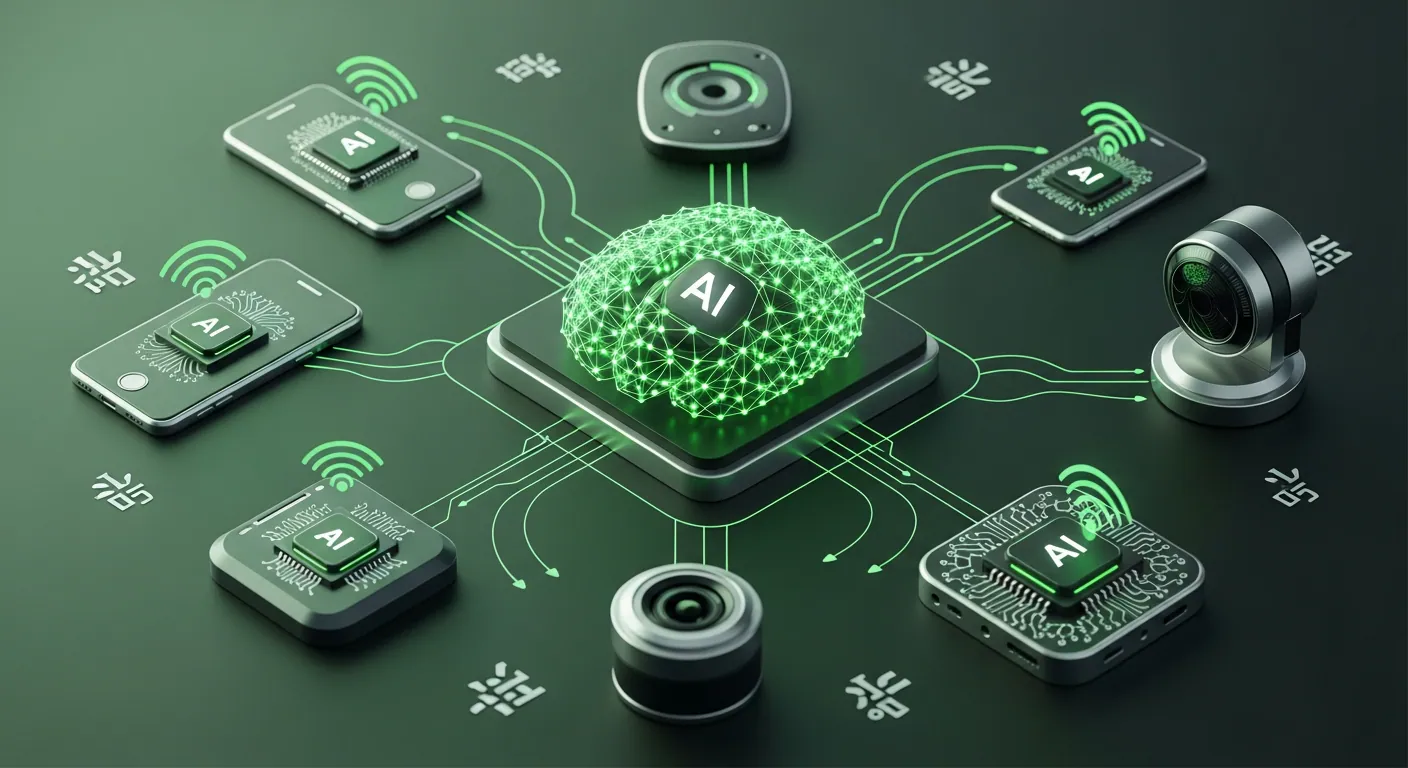
The shift isn't just about saving money on cloud bills; it's about Edge AI. By moving intelligence from the server to the device, we solve three critical bottlenecks: Latency (no network lag), Privacy (data never leaves your machine), and Cost (zero inference fees).
The "Textbook" Quality King: Microsoft Phi-4
Microsoft Research stunned the industry when they revealed the secret to making small models smart: better data, not more data.
Instead of training on the messy, chaotic internet, Microsoft trained the Phi series (now in its 4th generation) on "textbook quality" synthetic data—content generated by larger AIs specifically to teach logic, math, and reasoning clearly.
Phi-4 is widely considered the pound-for-pound champion of 2026. Despite being small enough to run on a consumer GPU, it scores suspiciously close to GPT-4 on reasoning benchmarks. For developers building offline apps or embedded systems (like robotics), Phi-4 is the default brain.
The Open Standard: Meta Llama 3 (8B)
If Phi is the specialist, Llama 3 (8B) is the generalist workhorse. Meta's commitment to "Open Weights" has made Llama the Linux of AI.
The 8-billion parameter version of Llama 3 is the most "fine-tuned" model in history. Because it is open, the community has built thousands of variations: versions trained specifically for medical diagnosis, versions that speak niche languages, and "uncensored" versions for creative writing.
For enterprise CTOs, Llama 3 8B is the sweet spot. It is small enough to host on affordable private servers but smart enough to handle customer support routing, document summarization, and SQL generation without hallucinating as much as smaller predecessors.
The Google Ecosystem Play: Gemma 2
Google's entry, Gemma 2, is built from the same research and technology as their massive Gemini models. Gemma shines in its integration.
In 2026, we see Gemma baked directly into the Chrome browser and Android OS. This allows web developers to call window.ai in JavaScript and run inference directly on the user's device without installing any external libraries. Google's strategy is ubiquity: making the SLM a standard utility of the operating system, much like a spellchecker is today.
The Enabler: Ollama
We cannot discuss SLMs without mentioning the tool that made them usable: Ollama.
Before Ollama, running a local model meant wrestling with Python dependencies, PyTorch versions, and obscure driver errors. Ollama turned this into a single command.
ollama run llama3ollama run phi4
It standardized the "API" for local AI. Now, software like Obsidian, VS Code, and unexpected enterprise tools use Ollama to talk to local models, creating a "Localhost AI" ecosystem that operates entirely offline.
Conclusion
The future of AI isn't just one giant brain in the cloud; it's a swarm of smaller, specialized brains on our devices. In 2026, the question isn't "Which model is the smartest?" but "Which model is efficient enough to run where I need it?"
Related Resources
Explore the tools mentioned in this article:
- Ollama - Run large language models locally
- LM Studio - GUI for running local models
- Meta Llama - Open-source large language model
- Hugging Face - AI community and model hub