The Robots Are Shipping: This Month in Robotics and AI
 Lorenzo Vallone
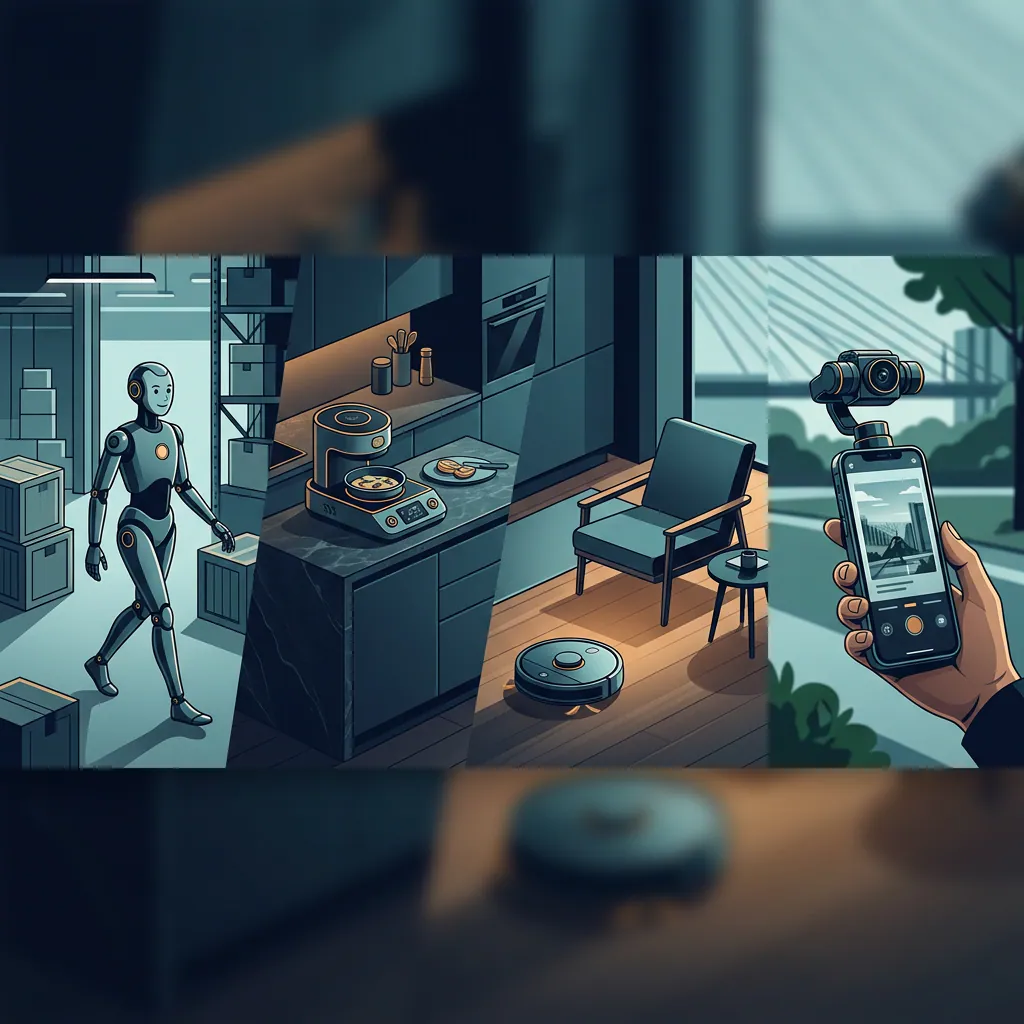
For years, robotics headlines were about demos: a humanoid doing a backflip, a robot dog opening a door. This month the tone changed. The stories that matter now are about products going on sale, robots getting jobs, and supply chains straining under real demand. Here's what the latest wave of newsletter coverage — led by Superhuman AI's Robotics Special — tells us about where robotics and AI are heading, and why it matters even if you never plan to buy a humanoid.
The robot phone is real — and it's a signal
Honor's much-teased Robot Phone officially launched, with pre-orders open in China and sales starting mid-August. The device packs a built-in motorized camera gimbal that tracks subjects, executes cinematic shots on its own, reacts to its surroundings, and even holds conversations.
The specs matter less than the signal. The smartphone converged on one design a decade ago; the first major break from that mold is robotic. A camera that moves itself, driven by on-device AI, turns a passive slab into something closer to an agent with a body. Expect the "robotic feature" pattern — motors plus perception plus a language model — to show up in more consumer hardware, not fewer.
Robots are quietly taking real jobs
The most telling story of the week wasn't a launch — it was a benchmark. Shenzhen-based X Square Robot livestreamed its WALL-B system, a single robot arm, sorting 1,816 parcels per hour with 98% accuracy from a chaotic unloading pile. For comparison, three of Figure AI's humanoid robots processed roughly 1,250 parcels per hour combined over a 200-hour run.
That's a quiet but important lesson for anyone evaluating automation: the humanoid form factor is captivating, but purpose-built robots still win on throughput and cost for well-defined tasks. Meanwhile, Agility Robotics claims its Digit V5 humanoid can now work alongside humans without safety fencing — the regulatory and practical barrier that has kept humanoids off real production floors. Both paths are advancing; the winner will be decided per use case, not by ideology.
The same shift is visible in food service. Wonder, the New York food hall chain, is rebuilding its operations around robots that make 500 bowls of food an hour — tripling kitchen output without new staff — backed by a fresh $650 million at a $9 billion valuation.
The home robot gets useful
Two consumer stories stood out. Matic, the home robot vacuum, shipped Cues: point at a spill, say "clean here," and the robot finds it with its five onboard cameras and handles it autonomously. And Posha, a countertop cooking robot — essentially a "coffee machine for food" — lets you pick a recipe, load pre-measured ingredients, and cut roughly 70% of your kitchen time while it does the cooking.
The common thread is multimodal AI. Voice, gesture, and vision have collapsed into a single natural interface. Home robots are stopping being appliances you program and starting to be helpers you talk to.
Geopolitics is now a robotics story
Two items underline how strategic this industry has become. Washington banned new Chinese robot imports last month — and, according to The Information, US robotics engineers are now hand-carrying components back from Shenzhen in their luggage because domestic supply chains can't keep up with humanoid development. Days after the ban, BYD unveiled Xiao Di, its 1.6-meter humanoid robot, in its Shenzhen and Shanghai showrooms.
Add China's proposal to staff its International Lunar Research Station with quadruped robot workers by 2035, and the pattern is clear: robotics is being treated as national infrastructure, the way chips were five years ago. For businesses, that means component costs, sourcing, and regulation are now part of any automation plan.
The corporate chessboard is moving fast
Uber sold its entire stake in Serve Robotics — the delivery-robot company that spun out of its Postmates acquisition — so abruptly that Serve learned about it from regulatory filings. Travis Kalanick's robotics startup Atoms, weeks after raising $1.7 billion, hired Uber's former finance chief as CFO. Tesla unveiled its first Cybercab with an integrated Starlink antenna, hinting at satellite-connected robotaxi fleets. And Bloomberg reports thousands of workers in India are being paid to film themselves doing manual tasks — training data for the robots that may eventually automate those very jobs.
Meanwhile, the AI layer keeps accelerating
Robotics doesn't advance in isolation — it rides on the model race, and that race is only getting faster. In the same week, the newsletters covered Grok 4.6 shipping with a focus on long-running agents (with 4.7 already announced weeks behind it), Google pushing Gemini deeper into its new Pixel lineup with sign-language transcription and natural voice input, and Anthropic publishing sobering research suggesting today's worker-retraining programs are nowhere near ready for large-scale AI displacement.
That last item deserves a pause. The models powering warehouse arms and kitchen robots are improving on a monthly cadence, while the institutions meant to absorb the labor impact move on a decade cadence. The gap between those two clocks is where both the opportunity and the responsibility lie.
What this means for your business
Three practical takeaways from this month's coverage:
- Automation is a buy decision now, not a research project. Cooking robots, sorting arms, and fenceless humanoids are shipping products with published throughput numbers. If a repetitive physical task is core to your costs, it's time to price the alternatives.
- Purpose-built beats humanoid — for now. One well-designed arm outperformed three humanoids by 45% on the same task. Match the robot to the task, not the hype.
- Watch the supply chain, not just the demo reel. Import bans and luggage-smuggled components tell you availability and pricing will be volatile. Build that into any automation timeline.
The robots aren't coming anymore. They're shipping — with tracking numbers.
Sources: Superhuman AI Robotics Special (August 15, 2026), The Neuron daily digest (August 13, 2026), and reporting by TechCrunch, The Information, Bloomberg, WSJ, and Gizmodo cited therein.