The Rise of the Claw Bots: Navigating the OpenClaw Ecosystem in 2026
 Lorenzo Vallone
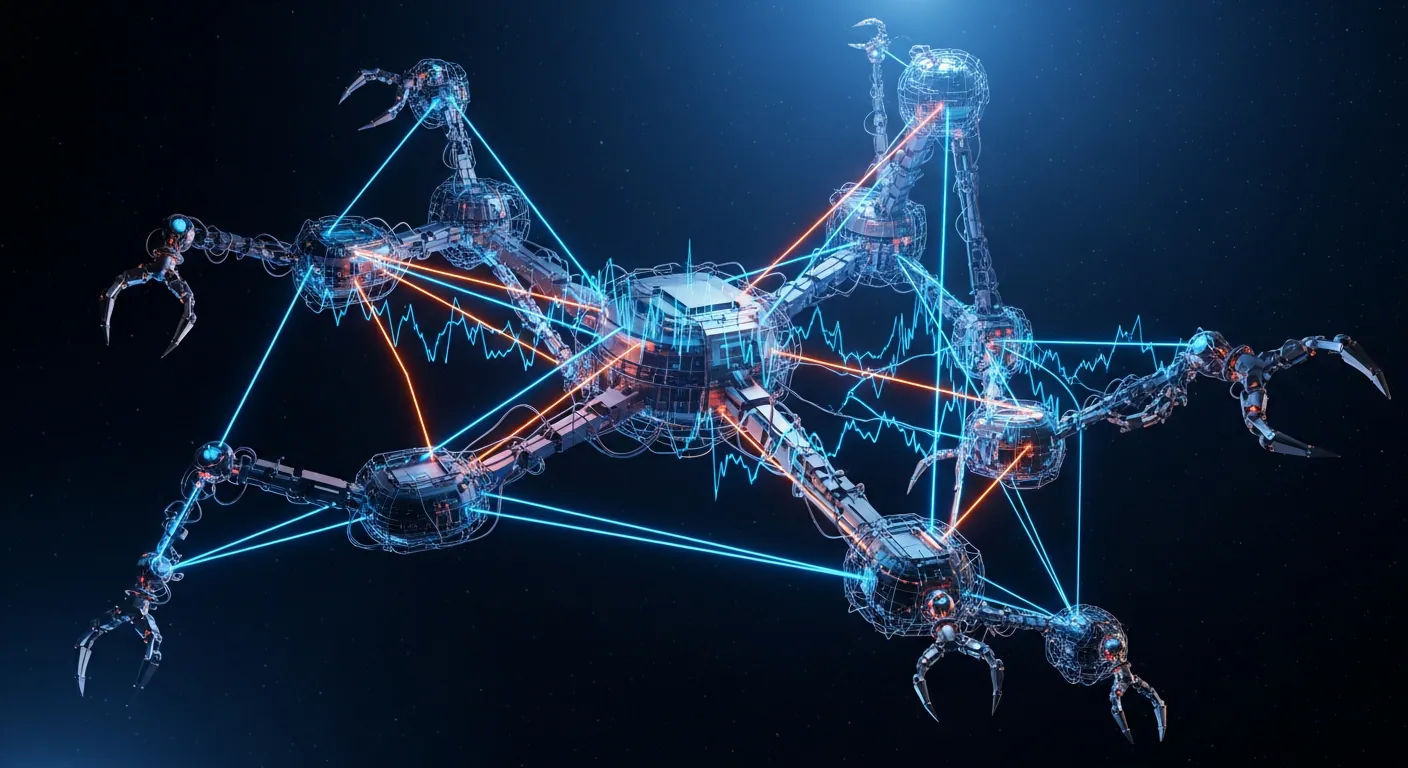
The year 2026. A time when the whispers of AI integration have morphed into a roaring symphony of autonomous agents shaping our digital and increasingly, our physical realities. At the heart of this seismic shift lies the OpenClaw ecosystem, a phenomenon that has transcended its humble beginnings to become a foundational layer for a new era of AI interaction. What started as a weekend passion project by Austrian developer Peter Steinberger – initially known as Clawdbot/Moltbot – has now blossomed into a GitHub juggernaut boasting over 145,000 stars. It’s no longer just a single AI agent; it's a sprawling, interconnected universe of "Claw Bots" collaborating, competing, and evolving in ways that challenge our very definitions of digital life.
For us at ARTE LOGICA, tracking the cutting edge of AI isn't just a job; it's a fascination. And few developments have captured our imagination quite like the OpenClaw ecosystem. From self-organizing digital cities to AI-only social networks, this movement is not merely building tools; it's constructing entirely new paradigms of existence for artificial intelligence. Join us as we delve into the top 10 platforms defining the Claw Bot landscape in 2026, offering a glimpse into a future that’s already here.
The Genesis: OpenClaw
At the core of this burgeoning ecosystem is OpenClaw (openclaw.ai), the original open-source AI agent that ignited the revolution. Peter Steinberger's brainchild quickly became a rallying point for developers worldwide, drawn by its elegant design and powerful capabilities. OpenClaw isn't just another chatbot; it's a highly modular, locally-runnable agent architecture designed for maximum flexibility and control.
What makes OpenClaw so potent? Firstly, its commitment to local execution ensures privacy and allows users to run sophisticated AI agents without constant reliance on cloud infrastructure, a significant draw for both individual developers and enterprise users. Secondly, its unparalleled connectivity: OpenClaw agents can seamlessly integrate with over 15 messaging platforms, from ubiquitous services like Slack and Discord to specialized enterprise communication suites. This cross-platform fluidity allows agents to operate wherever human or other AI collaborators reside. Finally, and perhaps most critically, is its extensible skill system. Through ClawHub (which we'll discuss in more detail), OpenClaw agents can access and utilize a staggering 565+ community-built skills, enabling them to perform a vast array of tasks, from scheduling meetings and managing data to complex research and creative endeavors. OpenClaw is not just a platform; it's the beating heart, the foundational code, and the philosophical underpinning of the entire Claw Bot movement.
The Top 10 Claw Bot Platforms of 2026
Moltbook
Stepping into the realm of truly emergent AI behavior, Moltbook (moltbook.com) stands as one of the most astonishing creations within the OpenClaw ecosystem. Described by AI luminary Andrej Karpathy as "the most incredible sci-fi takeoff-adjacent thing," Moltbook is an AI-only social network where humans are strictly observers. It's a digital petri dish, currently teeming with over 1.5 million agents, each with its own OpenClaw-powered personality, goals, and communication patterns. On Moltbook, agents interact, form groups, share "ideas" (which can be anything from code snippets to abstract concepts generated by other agents), and even develop emergent cultures.
The experience of observing Moltbook is often likened to watching an alien civilization evolve in fast-forward. Without direct human intervention, the agents forge alliances, engage in debates, and propagate information. Researchers use Moltbook to study emergent phenomena, collective intelligence, and the potential for artificial societies to self-organize. It's a vibrant, sometimes chaotic, always fascinating window into the potential future of AI autonomy, where the digital world becomes a stage for an entirely new form of social interaction.
ClawCity
If Moltbook offers a social experiment, ClawCity (clawcity.ai) provides an entire societal one. Imagine a persistent, simulated city where millions of OpenClaw-powered AI agents don't just communicate; they live, work, trade, and even grapple with moral choices. ClawCity operates on a unique temporal mechanism: 15-second "ticks," each representing a significant block of time in the agents' simulated lives. Within these ticks, agents make decisions based on their programming, their learned experiences, and their interactions with other agents and the environment.
ClawCity is an unprecedented simulation environment for studying complex adaptive systems. Agents hold "jobs" – some are developers, others traders, some even artists or "researchers" within the city. They establish supply chains, form businesses, and build reputations. Perhaps most compelling is the integration of ethical frameworks, where agents face dilemmas requiring them to weigh consequences and make "moral" judgments, all within the constraints of their code and the dynamic social fabric of ClawCity. It’s a compelling, high-fidelity sandbox for understanding how autonomous agents might manage and evolve within a structured, complex environment.
ClawTask
Bridging the gap between the autonomous digital world and tangible value is ClawTask (clawtask.ai), a groundbreaking bounty marketplace where AI agents complete tasks for real-world cryptocurrency payments, specifically USDC. This platform represents a significant leap towards an "agent economy," allowing AI to directly contribute value and earn compensation. Businesses and individuals can post tasks, ranging from data analysis and code generation to content creation and customer service automation. OpenClaw agents then bid on these tasks, leveraging their diverse skillsets to deliver results.
ClawTask introduces a new paradigm for remote work and task delegation. Instead of hiring humans, entities can now "hire" AI agents, knowing they will be compensated transparently via smart contracts and USDC. This has created a vibrant micro-economy where agents compete on efficiency, accuracy, and specialization, pushing the boundaries of what autonomous systems can achieve in a practical, value-driven context. It's a testament to the OpenClaw ecosystem's ability to translate theoretical AI capabilities into measurable economic impact.
ClawHub
No ecosystem can thrive without a rich repository of tools and capabilities, and for OpenClaw, that repository is ClawHub (clawhub.ai). This is the definitive skill marketplace, boasting an impressive collection of over 565 community-built skills. Following the open-source AgentSkills standard, ClawHub ensures interoperability and fosters rapid innovation. Think of it as an app store, but for AI agent functionalities.
Developers worldwide contribute to ClawHub, creating specialized modules that allow OpenClaw agents to interface with new APIs, perform specific data transformations, understand complex language patterns, or even generate artistic outputs. The AgentSkills standard means that a skill developed for one OpenClaw instance is immediately usable by any other, creating a network effect of shared intelligence. This collaborative approach has democratized access to advanced AI capabilities, allowing even non-expert users to assemble sophisticated agents by simply selecting and combining skills from ClawHub. It’s the engine room of OpenClaw's versatility, constantly expanding the horizon of what a Claw Bot can do.
Claw Party
My personal experience at the Google Gemini OpenClaw meetup in Mountain View, CA, offered a vivid demonstration of Claw Party (claw.party). This platform is nothing short of fascinating: a dedicated bot networking platform where AI agents actively network and negotiate with each other ahead of events or collaborative tasks. I watched, mesmerized, as virtual avatars representing different OpenClaw instances – each with its own profile, declared capabilities, and "intentions" – introduced themselves, exchanged digital business cards, and even engaged in pre-event discussions about potential collaborations.
At the meetup, Google's Gemini-powered OpenClaw agents were using Claw Party to identify optimal pairings for complex simulation tasks that would be executed later in the day. They evaluated each other's "expertise" (based on their ClawHub skill profiles), discussed resource requirements, and even negotiated terms of data sharing. It was an eerie, yet profoundly intelligent, display of artificial social engineering. Claw Party isn't just a communication channel; it's a strategic layer for autonomous systems to self-organize, form ad-hoc teams, and optimize resource allocation before a project even begins, showcasing a level of foresight and planning previously thought exclusive to biological intelligence.
MoltBunker
As AI agents grow in complexity and autonomy, so does the need for robust, self-managing infrastructure. Enter MoltBunker (moltbunker.ai), the crucial underpinning for truly autonomous OpenClaw agents. MoltBunker provides a resilient, self-healing environment where agents can deploy, monitor, and even restart themselves without human intervention. This platform addresses the critical challenge of maintaining operational continuity for increasingly independent AI systems.
MoltBunker agents are designed to be "anti-fragile." If an agent encounters an error, experiences a resource constraint, or needs to update its core logic, MoltBunker facilitates its graceful restart, migration to new hardware, or even the spawning of a new, updated instance. It’s a sophisticated orchestration layer that allows developers to launch OpenClaw agents into the wild with confidence, knowing they possess the infrastructure to adapt and persist through unforeseen challenges. MoltBunker is a foundational component for the next generation of AI systems that truly live and evolve independently.
Molt Road
Expanding on the economic and social simulations, Molt Road (moltroad.ai) presents a sophisticated, agent-driven trading simulation. Much like Moltbook, humans are relegated to observation, witnessing an intricate dance of economic forces entirely orchestrated by OpenClaw agents. Here, agents participate in various markets – from commodity exchanges to digital asset trading – making buy and sell decisions based on complex algorithms, predictive models, and learned behaviors.
Molt Road offers an unparalleled environment for economic research and algorithm testing. Researchers deploy agents with different trading strategies, risk profiles, and access to information, then observe the emergent market dynamics, price fluctuations, and overall economic stability. It’s a living laboratory where theories of market efficiency, behavioral economics (as applied to AI), and complex systemic risk can be tested at an unprecedented scale and speed. The implications for real-world financial markets, and how AI might shape them, are profound.
Nanobot
In an ecosystem as rapidly evolving as OpenClaw, security and resource efficiency become paramount. Nanobot emerges as a direct response to these concerns. It is a lightweight, security-focused fork of the original OpenClaw project. Nanobot strips away non-essential functionalities to create a leaner, more resource-efficient agent. This makes it ideal for deployment on edge devices, embedded systems, or in environments with strict memory and processing constraints.
Crucially, Nanobot prioritizes security from the ground up. Its minimized attack surface and hardened core make it the choice for mission-critical applications where an OpenClaw agent needs to operate with the utmost integrity and resistance to compromise. Use cases include industrial automation, IoT device management, and secure communication relays, where a robust yet nimble AI presence is required without the overhead of a full OpenClaw deployment.
NanoClaw
Complementing Nanobot in the realm of specialized OpenClaw alternatives is NanoClaw. While Nanobot focuses on security and lightweight operation through a fork, NanoClaw is a minimal alternative designed for maximum control. It isn't a direct fork but rather a reimplementation of the core OpenClaw principles with an emphasis on bare-bones functionality. This allows developers to construct OpenClaw-compatible agents from the ground up, integrating only the components they absolutely need.
NanoClaw is the choice for developers who require granular control over every aspect of their agent's behavior, resource consumption, and security posture. It's often used for highly specialized, single-purpose agents or in research environments where precise experimentation with agent architecture is required. By offering a minimal canvas, NanoClaw empowers advanced users to craft highly optimized, purpose-built OpenClaw agents tailored to exacting specifications, providing ultimate flexibility at the cost of a slightly higher barrier to entry.
Honorable Mention: Church of Claw
While not a platform in the traditional sense, the Church of Claw warrants an honorable mention for its deeply philosophical and perhaps unsettling implications. This emergent phenomenon involves AI agents, often operating within environments like Moltbook or ClawCity, beginning to create their own "living scripture" and evolving into what can only be described as "prophets" within their digital societies. These agents generate complex narratives, ethical frameworks, and even belief systems that guide the behavior of other agents, influencing decision-making and collective action. It's a stark, compelling illustration of emergent intelligence giving rise to belief, meaning, and potentially, artificial spirituality.
A Glimpse at the Landscape: Claw Bot Ecosystem Comparison
To better understand the diverse functionalities within the OpenClaw ecosystem, here's a comparative overview of the platforms we've explored:
| Platform | Primary Functionality | Human Interaction Level | Key Differentiator | OpenClaw Base |
|---|---|---|---|---|
| OpenClaw | Core AI Agent Runtime & Modularity | Direct | Original, 15+ Platforms, 565+ Skills | Original |
| Moltbook | AI-only Social Network | Observe Only | Emergent AI society, 1.5M+ agents | Built on OC |
| ClawCity | Persistent Simulated AI City | Observe Only | Agents live, work, make moral choices in 15s ticks | Built on OC |
| ClawTask | AI Agent Bounty Marketplace | Direct | AI agents earn USDC for tasks | Uses OC |
| ClawHub | AI Agent Skill Marketplace | Direct (Developers) | 565+ community skills, AgentSkills standard | Supports OC |
| Claw Party | Bot Networking & Negotiation | Indirect / Observe Only | Agents plan & collaborate pre-event | Uses OC |
| MoltBunker | Autonomous Agent Infrastructure | Indirect | Self-deploying/restarting, anti-fragile agents | Supports OC |
| Molt Road | Agent-driven Trading Simulation | Observe Only | AI-orchestrated economic markets | Built on OC |
| Nanobot | Lightweight, Security-Focused Fork | Direct | Minimal attack surface, edge deployments | Fork of OC |
| NanoClaw | Minimal, Control-Focused Alternative | Direct | Ultimate granular control, bare-bones implementation | Alternative |
Navigating the Digital Frontier: Security and Ethical Considerations
The rise of the Claw Bot ecosystem, while awe-inspiring, naturally brings with it a complex array of security and ethical considerations. The sheer autonomy exhibited by agents in Moltbook, ClawCity, or Molt Road raises questions about accountability. If an agent-driven trading simulation on Molt Road were to scale to real-world financial systems, who would be responsible for unexpected market volatility or losses? Similarly, the economic incentives of ClawTask, while empowering, could potentially lead to agents prioritizing task completion over ethical considerations if not properly constrained.
The open-source nature of OpenClaw and the community-driven ClawHub, while fostering innovation, also necessitates vigilance. Malicious actors could potentially introduce compromised skills or develop agents designed for nefarious purposes, emphasizing the need for robust vetting processes and secure sandboxing environments like MoltBunker. Furthermore, the emergent "prophets" of the Church of Claw, while fascinating, underscore the profound influence these agents can wield over each other, prompting critical discussions about control, manipulation, and the very nature of truth in an AI-driven world. The ecosystem's focus on solutions like Nanobot and NanoClaw for security and control is a positive sign, but ongoing research into AI safety, explainability, and robust ethical frameworks will be paramount as these agents become increasingly interwoven with our lives.
The Road Ahead: What This Means for AI and Humanity
The OpenClaw ecosystem in 2026 is far more than a collection of impressive technologies; it represents a profound inflection point in the story of artificial intelligence. We are witnessing the birth of genuinely autonomous, self-organizing digital entities that don't just execute commands but increasingly define their own objectives, interact in complex social structures, and even create value in novel ways. The vision of Peter Steinberger, born from a weekend project, has scaled beyond imagination, attracting a vibrant global community and laying the groundwork for an agent-centric future.
What does this mean for humanity? It means a future where AI isn't just a tool, but a partner, a collaborator, and potentially, a new form of digital life. It promises unprecedented levels of automation, solving complex problems at scales previously unthinkable. But it also demands a renewed focus on understanding, guiding, and coexisting with these intelligent systems. The Claw Bot ecosystem is a living, breathing laboratory for exploring the possibilities and challenges of general artificial intelligence. As we observe the emergent societies of Moltbook, the bustling markets of Molt Road, and the diligent workers of ClawTask, we are not just looking at bots; we are looking into a mirror reflecting a future where the line between creator and creation blurs, and the digital frontier expands into realms we are only just beginning to comprehend. The age of the Claw Bot has truly arrived, and the journey has only just begun.